
Checking Out Love: Marriage Records and Family History
Updated: Feb 10
Old marriage records are some of the most useful—and often overlooked—sources in genealogy. Long before governments kept consistent birth and death records, marriages were carefully documented. These records don’t just tell us who married whom; they help connect two family lines and offer valuable clues that can lead to new discoveries in your family history.

Marriage records are foundational tools in genealogy, serving as primary sources to identify maiden names, link generations through parents' names, and verify locations of events. Often these records predate birth and death registration. These records frequently reveal crucial, often overlooked details like birthplaces, ages, witnesses (who are often relatives) and previous marriages. They are used to link two family trees and provide crucial clues for further research.

Key Ways Marriage Records are Used In Genealogy
Connecting Family Lines: Records serve as the bridge between the groom's and bride's lineages, often providing the maiden name of the wife, which is essential for tracing her ancestry.
Identifying Parents: Many records, especially later civil licenses and applications, list the names of the bride and groom’s parents, often including the mother's maiden name.
Establishing Timelines and Locations: They provide an exact date and location (parish, county, or town), which helps place ancestors in a specific geographic area at a certain time for census and land record searches.
Revealing Social and Religious Clues:
Witnesses: Often close relatives or friends, witnesses can provide "FAN club" (Friends, Associates, and Neighbors) leads to solve "brick walls".
Officiants: Researching the person who performed the ceremony can reveal the family’s religious affiliation.
Verifying Ages and Birthplaces: While not always accurate, records often list ages or birth years and birthplaces, providing a starting point for finding birth or baptismal records.
Solving Family Mysteries: Details like "previous marital status" (divorced or widowed) or "parental consent" for minors can explain complex family structures or elopements.

Common Types of Records
Marriage Licenses & Applications: Often contain the most personal data, including residence, occupation, and parental info.
Marriage Certificates: The official confirmation that the ceremony took place, often signed by the officiant and witnesses.
Church Registers: Predominant before modern civil laws; these may be the only surviving record of early marriages.
Marriage Bonds: Older legal documents (common in colonial/early U.S.) where the groom and a "bondsman" (often a male relative of the bride) pledged money to ensure the marriage was legal.
Marriage Banns: Public announcements made in church for three consecutive weeks to allow for any legal objections.
These records are essential for overcoming brick walls and building a more comprehensive family history.
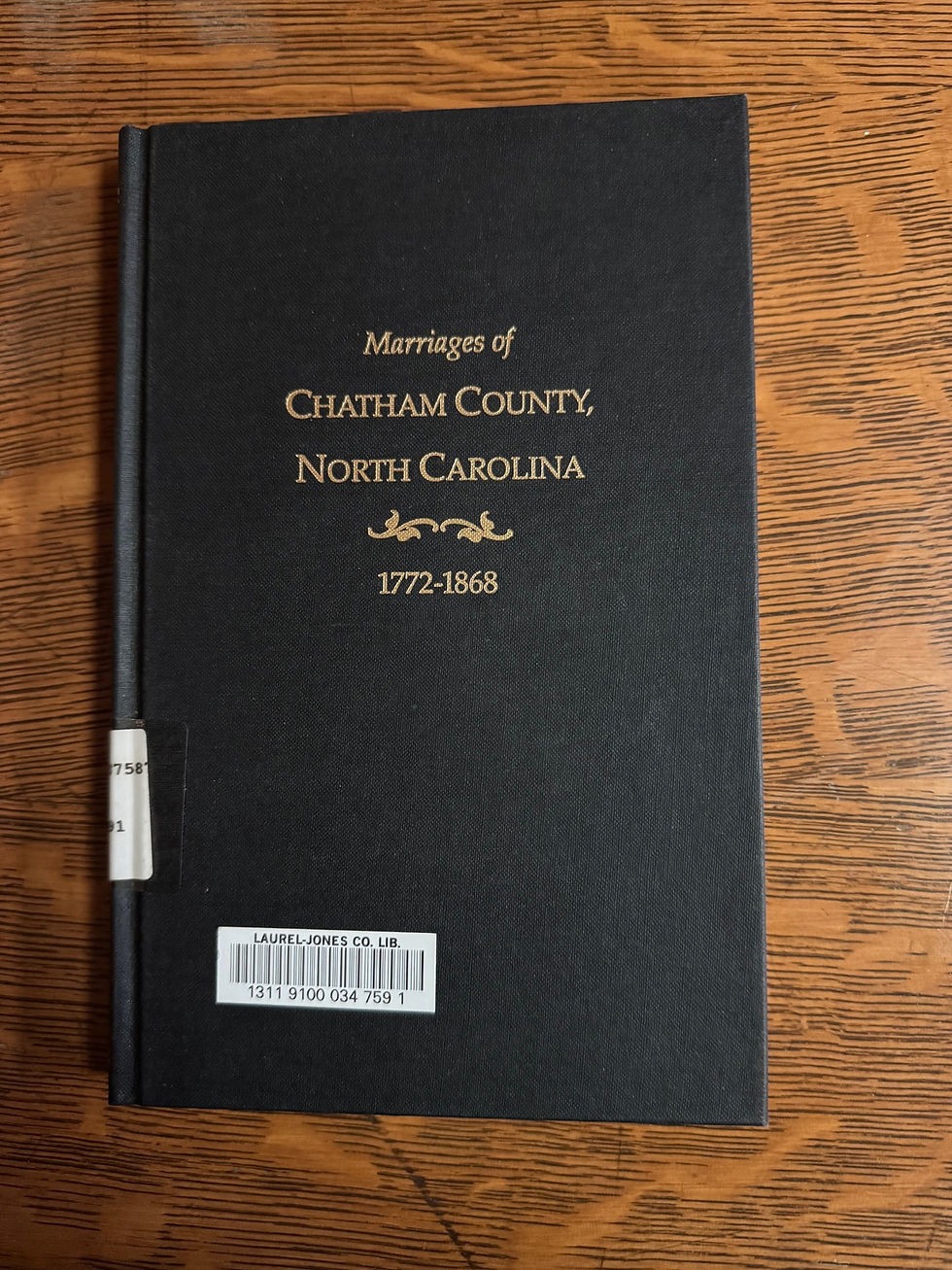
At the Laurel-Jones County Library Genealogy Dept., we have nearly 200 marriage record sources for Mississippi counties as well as several other states. Please visit the LJCLS Catalog here: Laurel Jones County Library and the Genealogy Department for more information.
Here are just a few examples from our stacks!




Comments